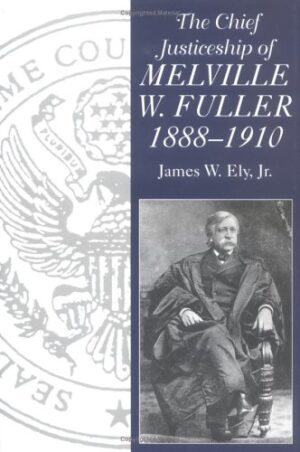
Melville W. Fuller
This was also the time of the Fuller Court. Chief Justice Melville W. Fuller and his cohorts in 1905 were consistently expressing contempt for, the Ninth Amendment which clearly states:
“The enumeration in the Constitution, of certain rights, shall not be construed to deny or disparage others retained by the people.”
To Fuller and those who continue to make outsized contributions to Law Schools, through endowments, the seven objectives referred to in the Preamble were to have no operative effect. (Excerpt- Profitable Intelligence)
Get the Book!
Description
A study of the man who led the Supreme Court as the nineteenth century ended and the twentieth began, exploring issues of property, government authority, and more.In this comprehensive interpretation of the Supreme Court during the pivotal tenure of Melville W. Fuller, James W. Ely Jr., provides a judicial biography of the man who led the Court from 1888 until 1910 as well as a comprehensive and thoughtful analysis of the jurisprudence dispensed under his leadership. Highlighting Fuller’s skills as a judicial administrator, Ely argues that a commitment to economic liberty, the security of private property, limited government, and states’ rights guided Fuller and his colleagues in their treatment of constitutional issues. Ely directly challenges the conventional idea that the Fuller Court adopted laissez-faire principles in order to serve the needs of business. Rather, Ely presents the Supreme Court’s efforts to safeguard economic rights not as a single-minded devotion to corporate interests but as a fulfillment of the property-conscious values that shaped the constitution-making process in 1787. The resulting study illuminates a range of related legal issues, including the Supreme Court’s handling of race relations, criminal justice, governmental authority, and private law disputes.