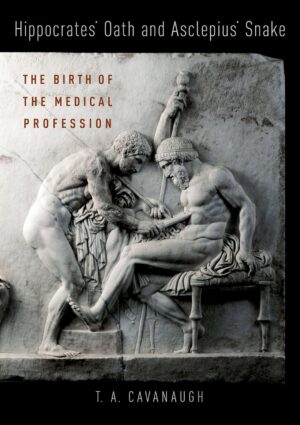
Hippocrates’ Oath and Asclepius’ Snake
“At last we have a book-length treatment of the Hippocratic Oath written by an ethicist who knows ancient Greek! Cavanaugh has made a major contribution, reading the text closely, and situating it in the context of Hellenic oath-taking practices, drama, poetry, philosophy, and mythology as well as medical history. The result is a really fresh look that allows the Oath to speak to us clearly in our own times. I recommend it highly to anyone interested in medical ethics or the history of medical ethics.” — Daniel P. Sulmasy, André Hellegers Professor of Biomedical Ethics, Georgetown University
Get the Book!
Description
T. A. Cavanaugh’s Hippocrates’ Oath and Asclepius’ Snake: The Birth of the Medical Professionarticulates the Oath as establishing the medical profession’s unique internal medical ethic – in its most basic and least controvertible form, this ethic mandates that physicians help and not harm the sick.
Relying on Greek myth, drama, and medical experience (e.g., homeopathy), the book shows how this medical ethic arose from reflection on the most vexing medical-ethical problem — injury caused by a physician — and argues that deliberate iatrogenic harm, especially the harm of a doctor choosing to kill (physician assisted suicide, euthanasia, abortion, and involvement in capital punishment), amounts to an abandonment of medicine as an exclusively therapeutic profession.
The book argues that medicine as a profession necessarily involves stating before others what one stands for: the good one seeks and the bad one seeks to avoid on behalf of the sick, and rejects the view that medicine is purely a technique lacking its own unique internal ethic. It concludes noting that medical promising (as found in the White Coat Ceremony through which U. S. medical students matriculate) implicates medical autonomy which in turn merits respect, including honoring professional conscientious objections.